
Technology Built For Manufacturing
Internal tooling and automation that connects shop-floor systems to the software your operations and planning teams actually use.
Manufacturing software, explained
Manufacturing software has to work on the factory floor, where production plans, stock and quality checks all change at once.
We start with one line, one site or one process, and connect the data your team already records, rather than replacing everything at once.
Traceability is a core need. Every batch, part and check should be recorded, so a problem can be traced back quickly.
Problems in Manufacturing and how we solve them
The problems
Production plans are updated by hand
Schedules change on paper or in spreadsheets, so the floor and the office can work from different plans.
Stock numbers are not trusted
Counts differ between systems, so orders wait while teams recount.
Quality records are hard to trace
When a defect appears, teams struggle to find which batch or machine was involved.
Our solutions
One production schedule
Plans are shared with the floor and the office, and changes are logged.
Accurate stock records
Stock moves are recorded as they happen, and counts can be checked against the system.
Traceable quality checks
Each batch and check is linked, so a defect can be traced quickly.
Why ELACTRO for manufacturing software
We start from your current line or site and the data it already records, so the change is gradual.
Safety, quality and traceability rules are confirmed with your team before the records are designed.

Engineering
How We Build For Manufacturing
Factory systems must work with machines, stock and production plans, so integration with current tools is planned first.
Capabilities
What we build for Manufacturing

Delivery
How we deliver Manufacturing work
We test on one production line or one site first, then extend to other sites after review.
Technologies for Manufacturing systems
- Next.js
- Node.js
- PostgreSQL
- Docker

Trust
Compliance and continuity for Manufacturing
Safety, quality and traceability rules are confirmed with your team, and records are designed to match them.
Related Services
Enterprise Software Development Services
Enterprise software development for internal systems. We build tools that connect to your existing systems and follow your access and audit rules.
Learn More about Enterprise Software Development ServicesBusiness Process Automation Services
Business process automation for approvals, data entry and reports. We automate your real workflow to cut manual work between your systems.
Learn More about Business Process Automation Services
Related Case Studies
Real projects where ELACTRO delivered this service.
Related Work
View Full Portfolio →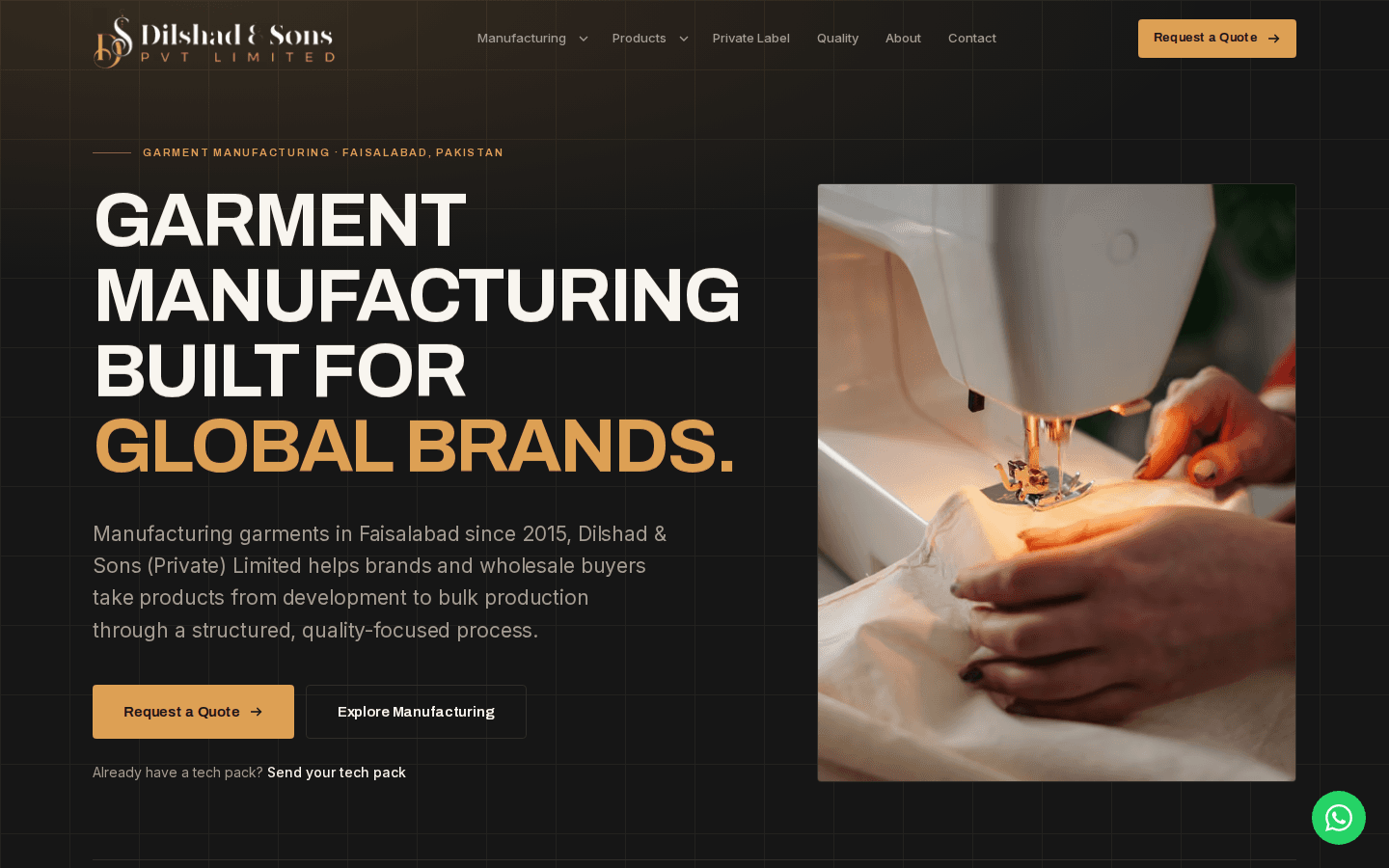

Dilshad & Sons (Private) Limited
A specification-led garment manufacturer in Faisalabad, Pakistan, serving international apparel brands and wholesale buyers from sampling through bulk production — the website is its primary channel for new buyer enquiries.
Live in ProductionWeb AppsManufacturingPakistanNext.jsServices Delivered
- Marketing Website Development
- UI/UX Design
Related Dubai Services
AI Agents for Businesses in Dubai
AI agents that handle multi-step work, such as checking orders, updating records and sending status updates, using your existing tools and clear access limits.
Explore AI Agents for Businesses in DubaiDigital Transformation Planning for Dubai Businesses
For Dubai businesses that want to modernize how they work. We review your current systems and plan the change in phases, so each phase delivers value on its own.
Explore Digital Transformation Planning for Dubai Businesses
Frequently Asked Questions
Can the system connect to our machines?
In many cases, yes. We review what each machine can share, such as status or counts, and agree the connection method during discovery.
Do we need to replace our ERP?
Usually not. Most projects connect to your current ERP and add the production and quality tools around it.
How do you start a factory project?
We start with one line or one site. We test the flow there, then extend to other lines after your team reviews the results.
How do you support traceability?
Each batch, part and check is linked in the record. Your team can search for a batch and see its full history.
Ready to Talk About Manufacturing?
Tell us which process, line or report is causing delays. We will suggest where to start.